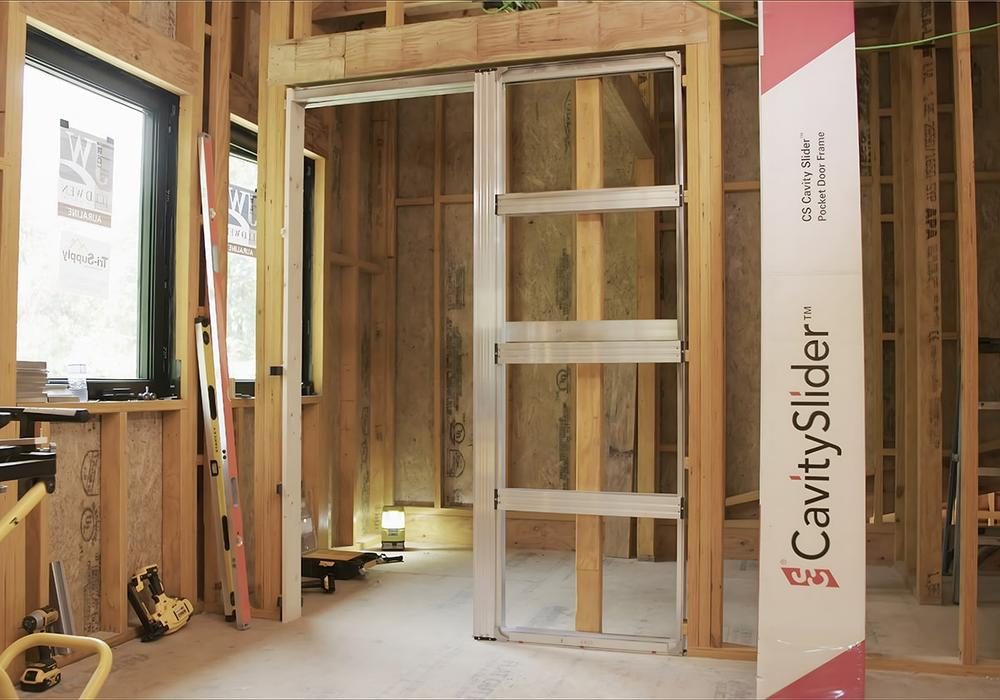

Pocket Door Frame Assembly

Why pocket door frames fail, and the three choices you can make to avoid it

Thinking twice about pocket doors?

This article breaks down the three most common causes of pocket door frame failure and the practical choices that help builders and architects avoid them.

Introduction

Pocket doors are exploding in popularity… and for good reason. They save valuable floor space and offer a clean, modern aesthetic that homeowners and architects love.

But ask any builder, and you'll hear a familiar gripe: pocket doors can be a pain to install and even worse to maintain.

It doesn’t have to be that way. 

With a few intentional choices during planning and installation, builders can dramatically reduce assembly time, installation, and avoid dreaded callbacks.

Here are three simple tips that make all the difference.

Tip #1: Assembly

pocket frame assembly

Assembling anything for the first time can be challenging, but a well-designed pocket door frame kit should remove most of the frustration.

Below are a few things to look for that make assembly faster and more predictable.

Does this kit offer clear installation instructions and video support?

Your kit should include straightforward instructions with detailed images that highlight potential trouble spots. For many installers, video walkthroughs are even more effective, making it easy for anyone—regardless of experience—to get up to speed quickly.

If you are using the CS Cavity Sliders pocket frame kit, make sure the service notch on the track butts up to the closing jamb, NOT the back stud.

CS-Cavity-Slider-Pocket-Door-Frame-Assembly

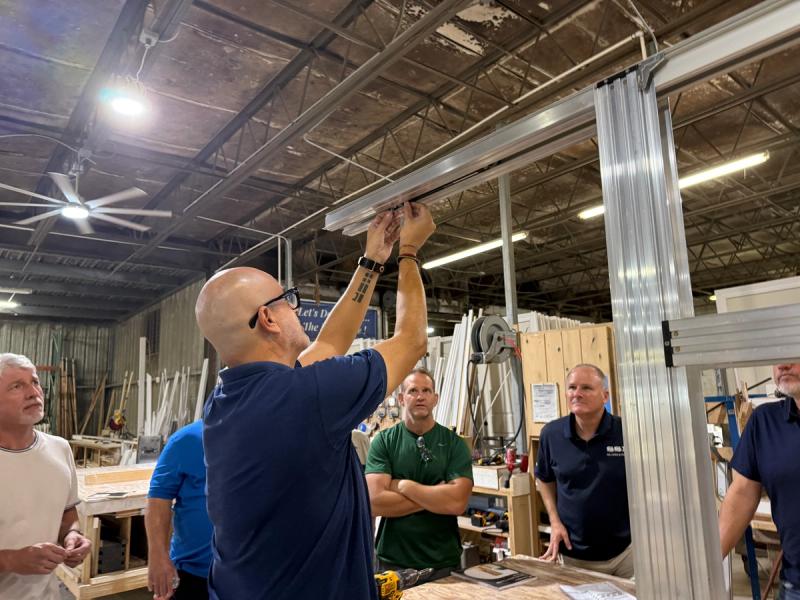
Watch the video below for assembly instructions, starting at 1:35.

Assemble and install the CS Cavity Slider Pocket Door Frame by securing the track, attaching the frame to the wall studs, fitting the door brackets, and ensuring alignment for smooth sliding operation.

How does precisely cut parts affect the pocket frame?

Precise cuts are critical for pocket door systems. Small inaccuracies in the frame and track system can cause the door to stick, rub, or hang unevenly.

When all parts are cut exactly to specification, installation becomes faster, adjustments are minimal, and the door glides smoothly every time.

This is why material choice matters. Extruded aluminum, for example, is lightweight, strong, and allows for extremely accurate cuts.

Additionally, look for frame kits made from precision-cut components. This ensures all parts fit together better and require less fixing, which speeds up the entire process.

CS Cavity Sliders extrusions

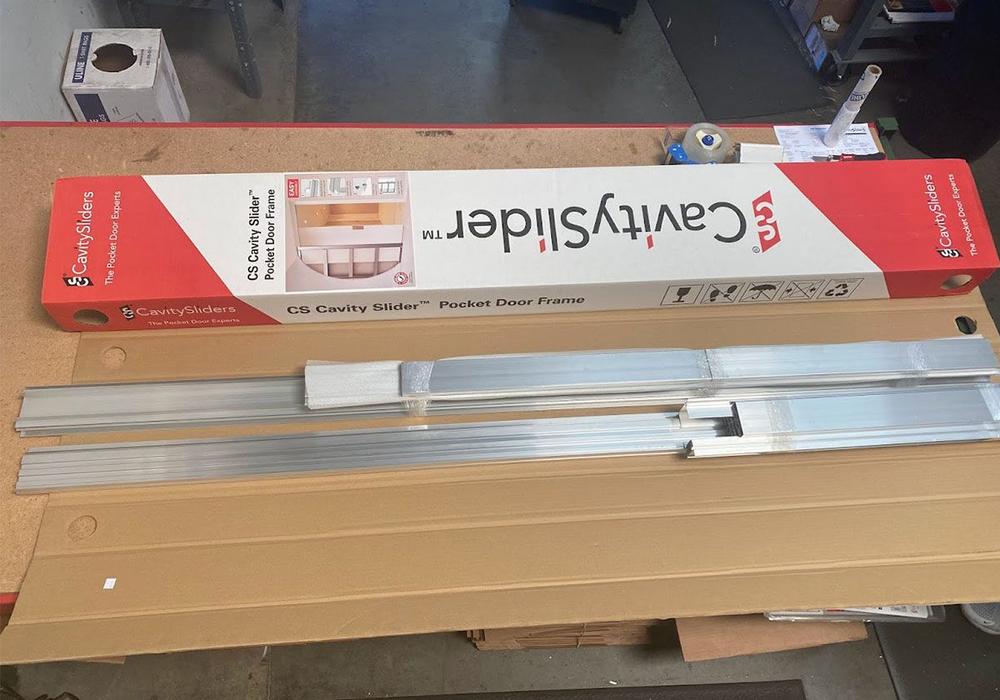
Does the packaging streamline the process or slow it down?

A well-organized, single-package kit sets you up for success.

When parts are intentionally designed to nest and packaged clearly, it’s easier to identify components, stay organized, and move through assembly without confusion.

CS Cavity Sliders kit

Want to learn pocket frame assembly from the pros?

Learn straight from the pocket door experts during a pocket frame live assembly walkthrough at IBS 2026.

Stop by Booth #W6783 to connect with the team and join the live demo.

Fill out the form to get a free IBS 2026 expo pass.

IBS 2026 banner promo

Tip #2: Installation

pocket frame installation

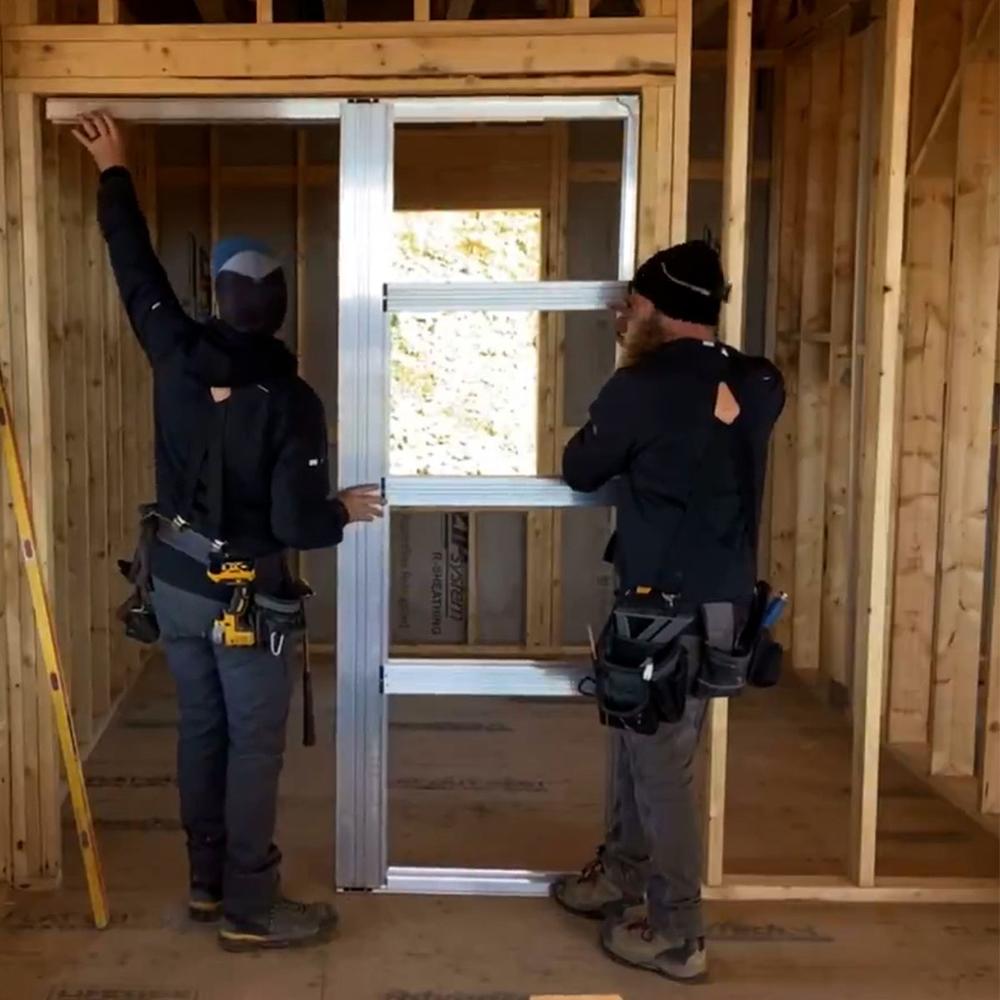
You’ve assembled the frame, and now it’s time to set it in the rough opening.

Will it be square? Will the jambs and studs stay level?

These details matter more than anything else for long-term pocket door performance.

Here are three key questions to prepare yourself before you start installing.

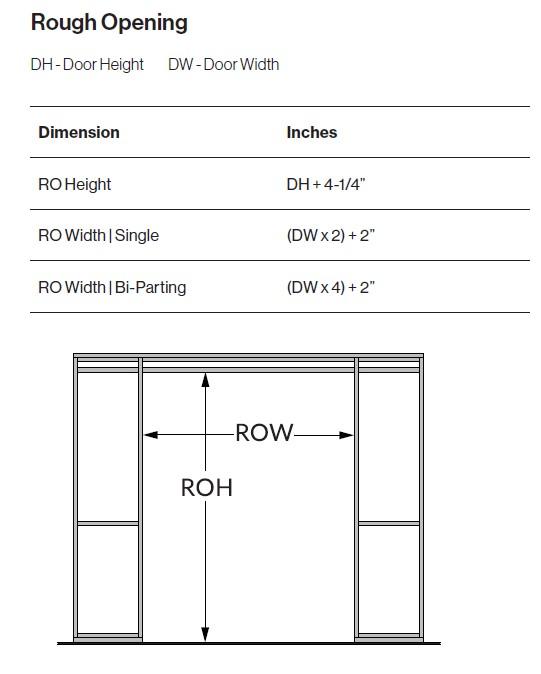
How do I figure out the rough opening size?

Start with the correct opening dimensions. This ensures the frame fits properly, stays level, and requires minimal shimming.

  • Rough opening height: Frame height + 4¼ inches
  • Rough opening width: Door width × 2 + 2 inches

Accurate sizing up front prevents cascading issues later.

rough opening size calculator

Where do I begin fastening the frame?

The way you fasten the frame to the rough opening matters.

Begin by securing the back stud, top first, then bottom, checking the level as you go. Add 1–2 more fasteners to the back stud as needed. Repeat the process for the closing jamb, being careful not to overtighten and twist the frame.


For bi-parting setups without a closing jamb, use the predrilled holes in the track to fasten directly into the header.


Once the uprights are secured, fasten the bottom frame into the subfloor to lock everything in place.

cs cavity sliders pocket frame installation

Watch the video below for installation instructions, starting at 6:28.

Assemble and install the CS Cavity Slider Pocket Door Frame by securing the track, attaching the frame to the wall studs, fitting the door brackets, and ensuring alignment for smooth sliding operation.

Do I need a removable trim system?

Yes! A removable trim system saves major headaches down the road.

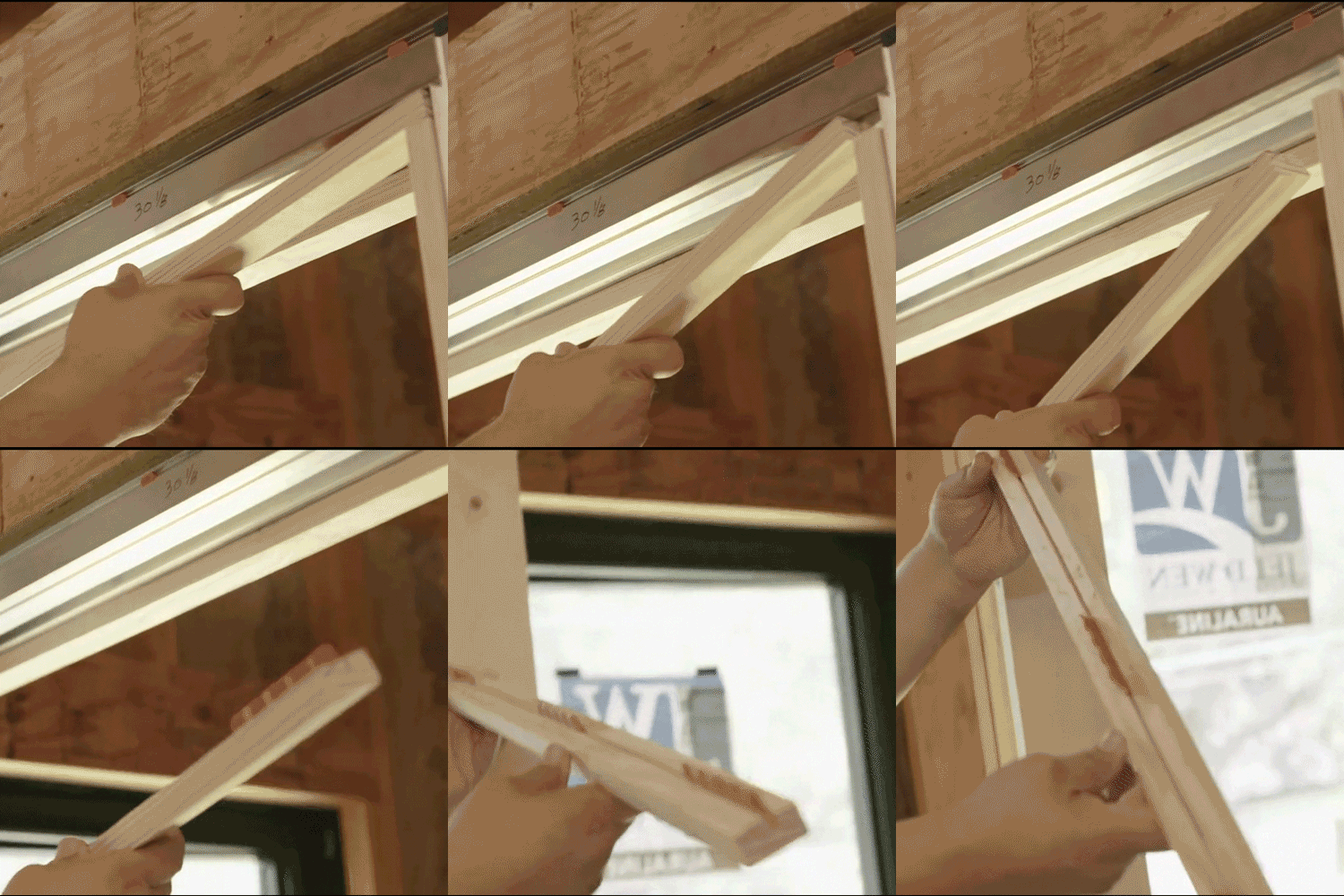
Trim clip channels and red “bacon strip” trim clips allow the split jambs and header jambs to be attached—and later removed—without damaging drywall. If the door ever needs servicing, this simple detail can turn a wall-opening nightmare into a clean, straightforward adjustment. 

CS Cavity Sliders jamb kit

The CS JambKit is our custom solution designed to streamline pocket frame installation from fit to finish for builders.

Tip #3: Frame Selection (Choosing the Right Kit and Features)

pocket frame installation

Not all pocket door kits are created equal.

Long before assembly or installation, the quality of the frame you choose will determine how the door performs years down the road.

These features below aren't just “nice to have”—they’re essential value points that should be present in any pocket door system (and really, in all building materials you trust).

These are the three most important questions to consider when selecting a pocket door frame.

How can I ensure structural integrity when installing a pocket door?

Weak cavities that concave under drywall pressure are a recipe for callbacks. This is why both material selection and system design matter.

Consider these two features to ensure structural integrity.

  • Extruded aluminum components: provide strength, stability, and predictable alignment.
  • Bowed-out split jambs: offer better registry at the cavity, keeping the pocket straight and preventing rubbing.
cs cavity sliders pocket door frame

How do I plan for future maintenance of this pocket door?

If accessing the carriages requires tearing into drywall, the system is already flawed.

Look for service-friendly design features such as:

  • Removable trim systems that use trim clips for clean removal and reinstallation.
CS Cavity Sliders Jamb Kit
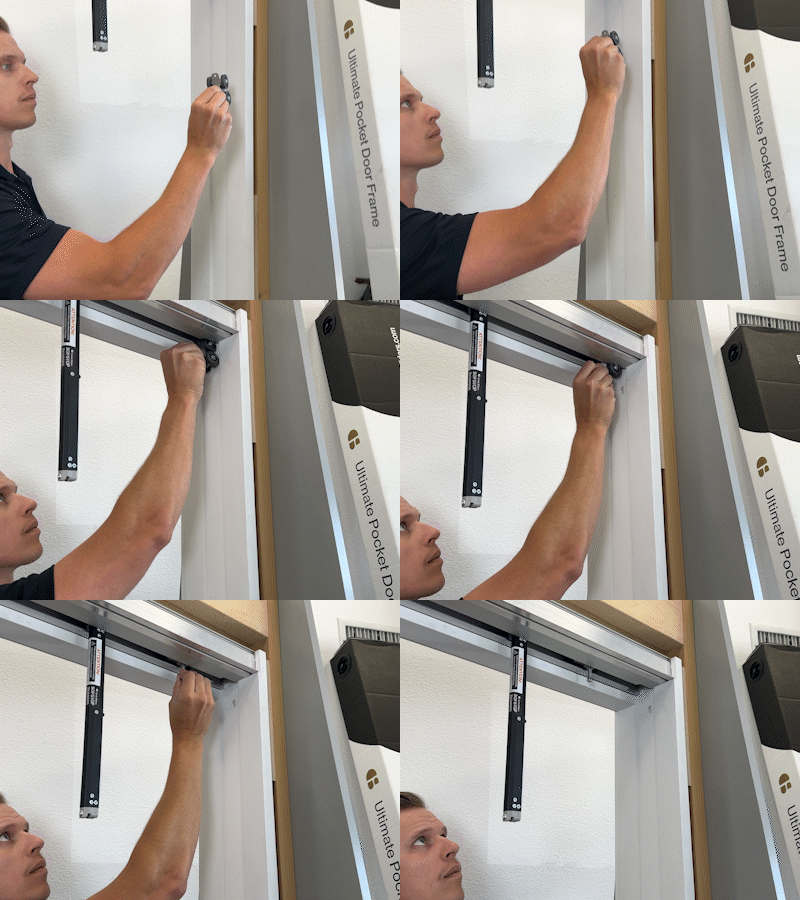
  • Notched track sections that allow you to remove the carriage without cutting anything open.
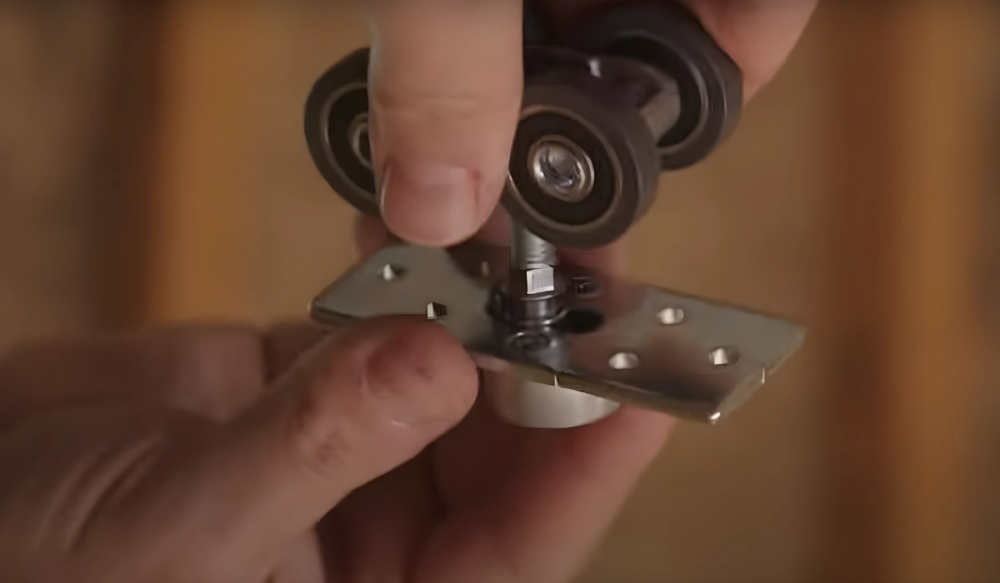
  • Quick-attach carriage hardware that makes dropping the door simple and efficient.
CS carriages

What features ensure the pocket door slides smoothly?

A pocket door should feel effortless from day one and stay that way. No clunks, no grinding, no surprises. That comes down to the quality of the track and carriage system.

Choose a kit that uses:

  • Extruded aluminum track rather than cold-rolled steel, which can bend or deform.
  • Sealed ball-bearing carriages for consistent, long-term glide—far superior to wheels spinning on a bare metal spindle.
  • Nylon wheels to reduce noise and vibration.
  • Adjustable T-guide to avoid scraping on the door.
Inserting CS Carriage into track

Final Tip: The Pocket Door Solution That Does It All

Pocket doors only become a problem when the details aren’t thought through.

Keep these three key tips mentioned above in mind before specifying your next pocket door frame, and you’ll make the whole process a lot easier. Installs go faster, projects run smoother, and callbacks become far less likely.

For pocket door frames that perform—and last—CS Cavity Sliders delivers a complete solution that checks every box.

Related Articles

Loading Content...
Knowledge Hub

Why pocket door frames fail, and the choices you can make to avoid it

Thank you!

Your submission has been sent.